
For years, SEOs relied on simple checks to answer a basic question: Is this page indexed by Google?
The logic was straightforward. If Google could return a page through a site: search or an exact URL query, the page was indexed. If it couldn’t, the page wasn’t.
As of January 2026, that logic no longer holds.
Today, it is entirely possible for a page to rank in Google search results, receive impressions and clicks, and be crawled regularly, while simultaneously appearing “not indexed” through traditional checking methods.
This article explains why this happens, what has changed inside Google, and how index checks should be interpreted going forward.
The Core Problem: Indexing and Retrievability Are No Longer the Same
The biggest misunderstanding in modern SEO is treating indexing and retrievability as equivalent. They are not.
Google no longer exposes a complete or faithful view of its index through public search interfaces. Tools and operators that once served as reliable diagnostics now return filtered, incomplete results.
A page can be fully active in Google’s ranking systems while remaining hidden from:
site:searches- Exact URL searches
- Quoted phrase searches
- “About this source” panels
This is not a bug. It is how Google now operates.
What We’re Seeing in Practice
What We’re Seeing in Practice
Across multiple sites and verticals, the same pattern appears. Here are two real examples from January 2026, tested multiple times with consistent results.
Example 1: online.bestcasino-canada.com
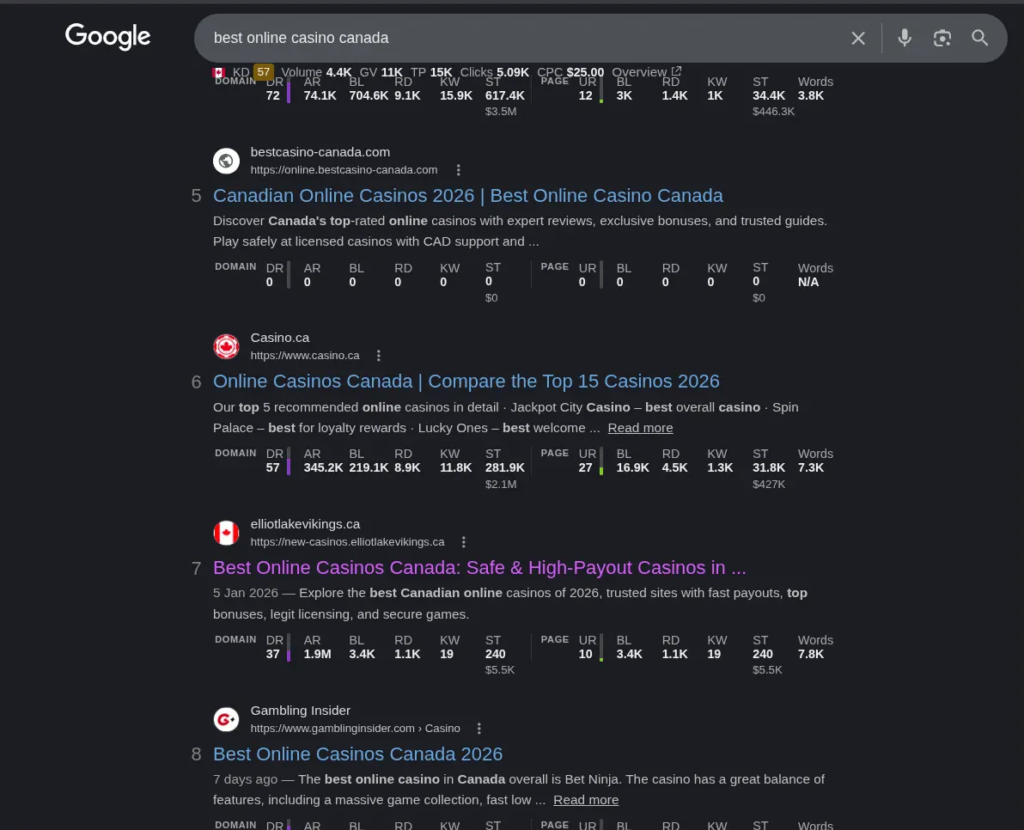
This subdomain ranks at position 5 for “best online casino canada,” a competitive query with significant search volume.
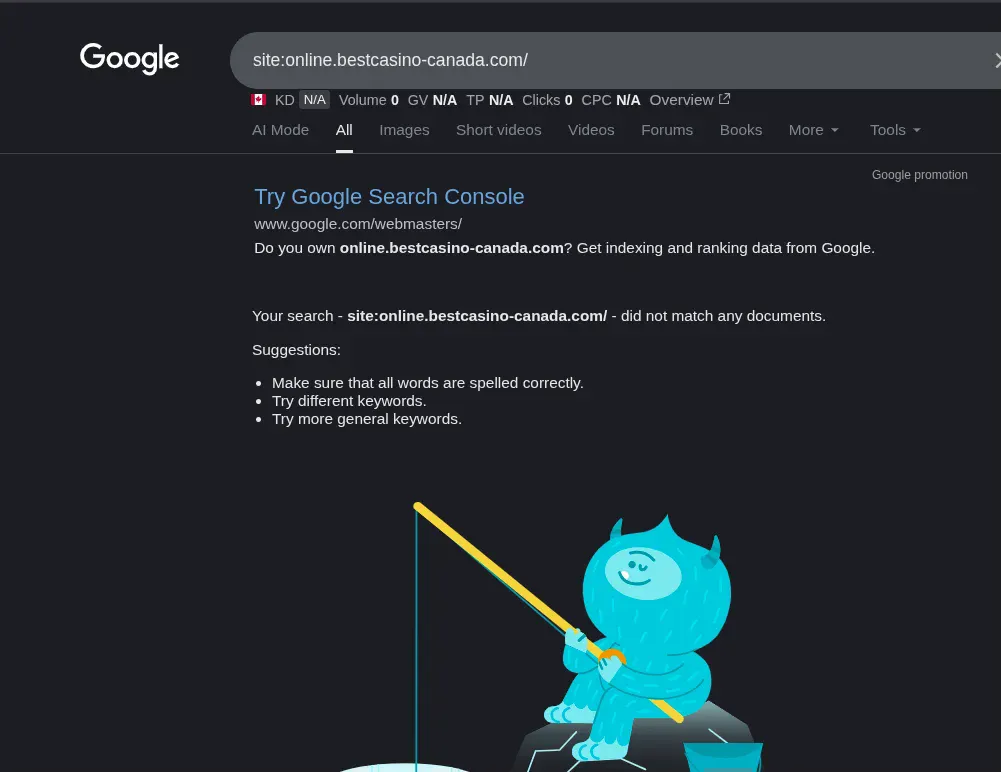
Yet when you run a site: search for this exact subdomain, Google returns nothing. Zero documents matched.
Searching for the exact URL directly also fails to return the page itself, showing only other sites that rank for similar content.
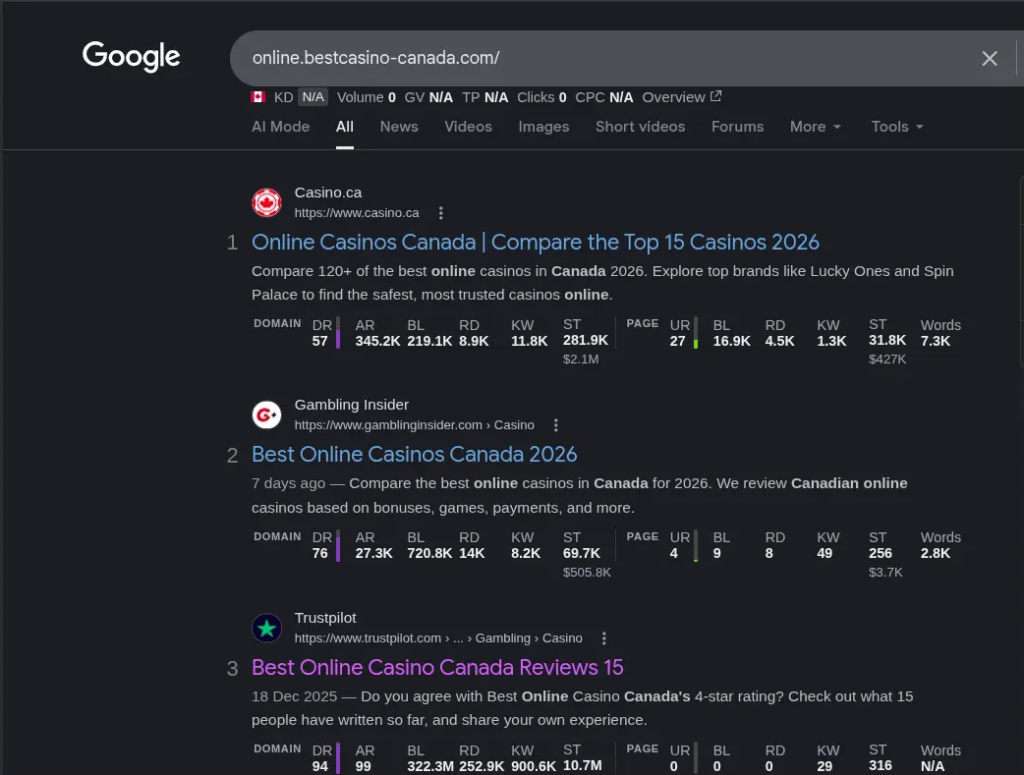
By traditional logic, this page is “not indexed.” But it is ranking on page one.
Example 2: new-casinos.elliotlakevikings.ca
This subdomain ranks at position 7 for the same query. (see image 1)
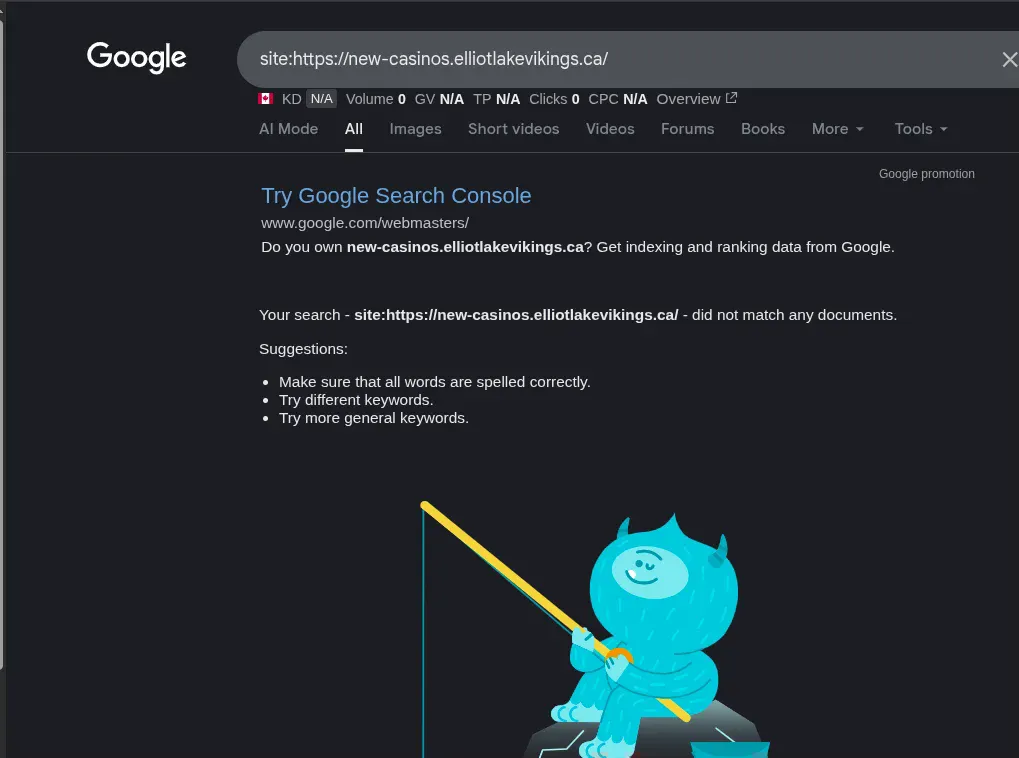
But search for the full URL directly, and Google returns a different page entirely. The main domain elliotlakevikings.ca appears indexed, while the subdomain that is actively ranking shows nothing.
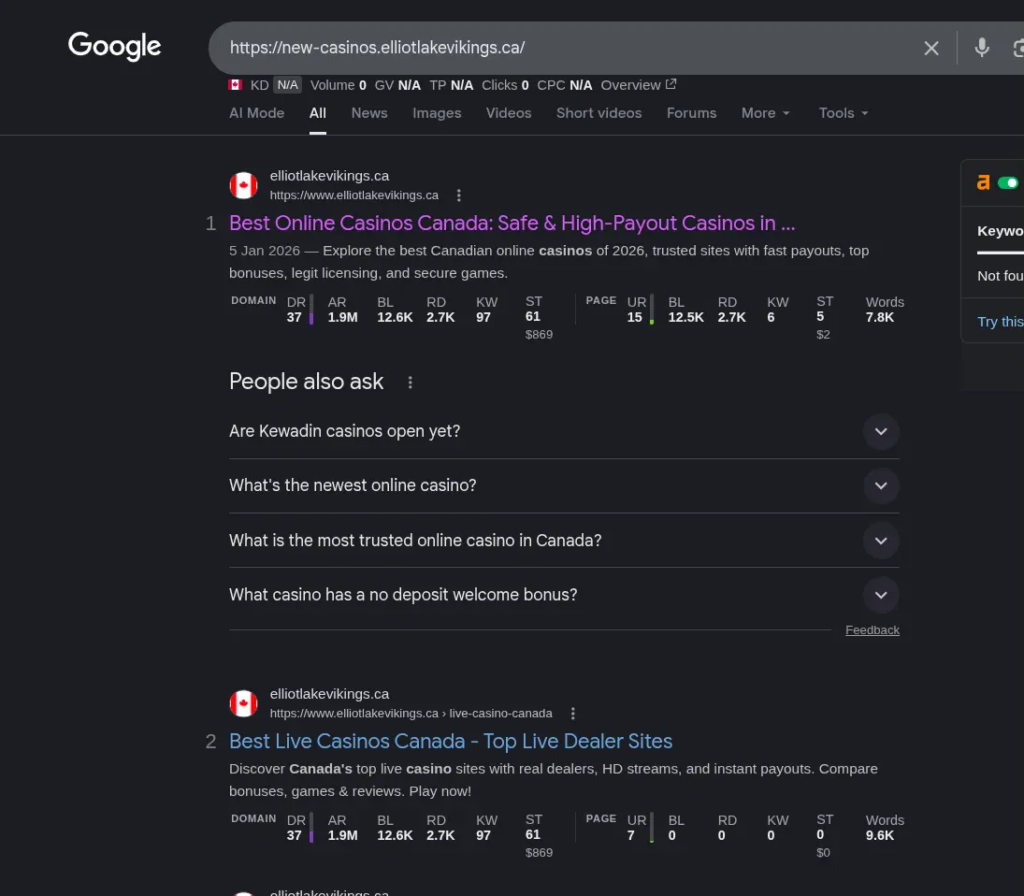
The subdomain is ranking on page one. The subdomain does not exist according to Google’s index checks. Two different answers from the same search engine.
The Takeaway
If these checks were taken at face value, the conclusion would be: “These pages are not indexed.”
That conclusion would be wrong. Both pages are actively ranking and receiving traffic.
Google No Longer Has a Single, Publicly Observable Index
Modern Google Search runs on multiple internal systems, each designed for different purposes.
Ranking and Serving Systems determine which pages are eligible to rank, how they are scored, and when they appear in search results. If a page ranks, it exists in these systems.
Retrieval and Enumeration Systems power site: searches, exact URL lookups, and public discovery interfaces. These systems are heavily filtered and no longer reflect full index coverage.
A page can exist in the first system without being visible in the second.
Why Google Limits What Its Tools Reveal
Google has strong reasons to restrict what public search operators expose:
- Preventing large-scale index mapping
- Reducing reverse-engineering of ranking signals
- Suppressing low-value or derivative discovery paths
- Controlling how entities, sites, and subdomains are consolidated
- Limiting automated auditing of the index
There is also a simpler explanation: Google cannot effectively control spam at scale. By making its systems more opaque, Google reduces the feedback loops that spammers rely on to test and refine their tactics. When you cannot easily confirm whether a page is indexed, you cannot easily iterate on what works. Opacity becomes a spam mitigation strategy.
The result is a deliberate separation between “pages Google uses” and “pages Google will show you directly.”
Subdomains, Entity Consolidation, and Canonicalization
This behavior is especially common when Google applies entity consolidation or canonicalization.
In practice, Google may:
- Treat subdomains as part of a single site entity
- Consolidate signals to a different canonical hostname
- Attribute content to a primary source domain
When this happens, the page can still rank and its signals still count, but the original URL may appear absent from index-checking views.
This explains why some pages appear “not indexed” even though Google is actively using them.
What “Not Indexed” Results Actually Mean Now
A negative result from an index check can indicate several different things:
- The page is genuinely not indexed
- The page is indexed but hidden from retrieval interfaces
- The page has been canonicalized to another source
- The page is filtered from operator-based views
Only the first case represents an actual indexing problem. The others are false negatives, and they are now common.
What Still Counts as Proof of Indexing
As of 2026, the most reliable indicators that a page is indexed are:
- The page ranks for queries
- The page receives impressions or clicks
- Googlebot crawls the URL regularly
- Google Search Console confirms inclusion
By contrast, these signals are no longer definitive on their own:
site:searches- Exact URL searches
- Quoted phrase searches
- “About this source” visibility
These can support an analysis, but they cannot be treated as final verdicts.
How Index Checking Should Be Used Going Forward
Index checks are no longer binary. They should be treated as:
- Diagnostic signals, not absolute truths
- Contextual indicators, not confirmations
- Starting points, not conclusions
A “not indexed” result should prompt further validation, not immediate alarm.
Why We’re Updating Our Index-Checking Guidance
Because Google’s behavior has changed, the way we present and explain index-checking results must change too.
We are updating our guidance to:
- Clearly warn about the possibility of false negatives
- Explain why ranking pages may appear non-indexed
- Encourage validation through rankings, impressions, and crawl data
- Provide context that helps you interpret results accurately
This is not about lowering standards. It is about reflecting reality.
The Bottom Line
In January 2026, Google indexing is no longer fully observable from the outside.
If a page ranks, Google is using it, regardless of whether public tools can retrieve it.
The key question is no longer “Can Google show me this page?”
It is: “Is Google relying on this page in its ranking systems?”
Those two questions now have very different answers.
Have questions about your index status? Our team can help you interpret results in context and identify genuine indexing issues versus false negatives. Contact us for a detailed analysis.
Want to verify that we trigger Googlebot ? Learn how to prove it yourself with no server log access required.